Written by Dr Alexey Borshch, Orthopaedics, FAOrthA, MBBS, BSc(Hons), dralexeyborshch.com.au on 30 October 2026
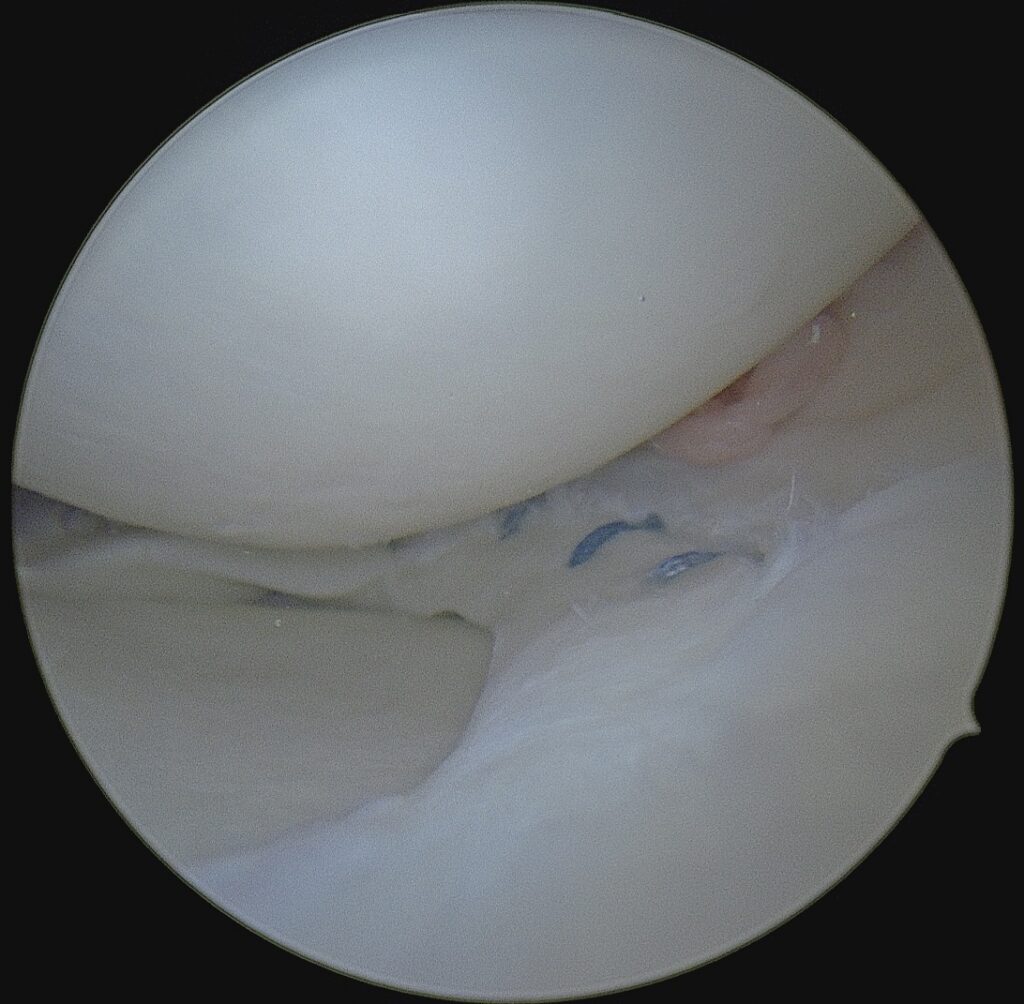
Each knee has two menisci: the medial (inner) and the lateral (outer) meniscus. They are C-shaped pads of cartilage between the thigh bone and the shin bone that cushion the joint and spread load across it. A meniscus usually has a poor capacity to heal, so a repair stitches a torn meniscus back together to help it heal, instead of removing the torn part. The operation is usually done under a general anaesthetic, with local anaesthetic for pain relief. It is performed by knee arthroscopy (keyhole surgery): a small camera and instruments are inserted through small incisions at the front of the knee. The tear, cartilage, ligaments and the rest of the knee are checked first. Sometimes whether a tear can be repaired is only confirmed at this stage. The torn edges are brought together with sutures, using all-inside devices, inside-out or outside-in stitching, or a combination, depending on where the tear is and its pattern. Some techniques need a small extra incision. The healing environment of the tear may also be stimulated. The aim is a stable repair that keeps as much healthy meniscus as possible. If the tear cannot be repaired, the unstable, damaged part is trimmed instead (partial meniscectomy), keeping as much healthy meniscus as reasonable. When the tear occurs together with an ACL injury, the meniscus is often repaired during the ACL reconstruction. Afterwards, crutches and sometimes a brace are used to protect the repair. How much weight can be put through the leg, and for how long, depends on the type of tear that was repaired.